 English
Blog


2026-09-28 18:17:19
The minimum height for fall protection depends on the type of workplace, industry, and applicable safety regulations. Under U.S. OSHA standards, fall protection is generally required when employees are exposed to an unprotected side or edge 4 feet (1.2 meters) or more above a lower level in general industry, while the trigger is generally 6 feet (1.8 meters) or more in construction.
However, height alone does not determine whether a worker needs a fall protection system. The type of work, surface, equipment, fall hazard, and applicable OSHA standard must also be considered.
A properly selected Fall Protection Harness can form an important part of a personal fall protection system. Depending on the application, a harness may be used with an anchorage, lanyard, lifeline, or other connecting device to prevent a worker from reaching a fall hazard or to arrest a fall after it occurs.
Understanding the minimum height requirements is therefore important for employers, safety managers, contractors, and workers who perform elevated work.
Falls from elevated working surfaces can result in serious injuries even when the elevation does not appear particularly high. A worker can lose balance, slip, or step through an opening unexpectedly.
For this reason, workplace fall protection regulations establish specific heights at which employers must provide protection.
In general industry, OSHA requires protection for employees on walking-working surfaces with an unprotected side or edge that is 4 feet or more above a lower level, unless an applicable exception applies. OSHA identifies guardrails, safety nets, and personal fall protection systems as possible methods of protection.
Construction has a different general threshold. OSHA's construction requirements generally require protection when workers are exposed to vertical drops of 6 feet or more. Personal fall arrest systems are one option for protecting workers from these hazards.
This difference is important because there is no universal answer such as “fall protection always starts at six feet.” The applicable regulation must be identified first.
For many general-industry applications in the United States, yes.
OSHA 29 CFR 1910.28 generally requires employers to protect employees from falls when they are working on a walking-working surface with an unprotected side or edge that is 4 feet or more above a lower level.
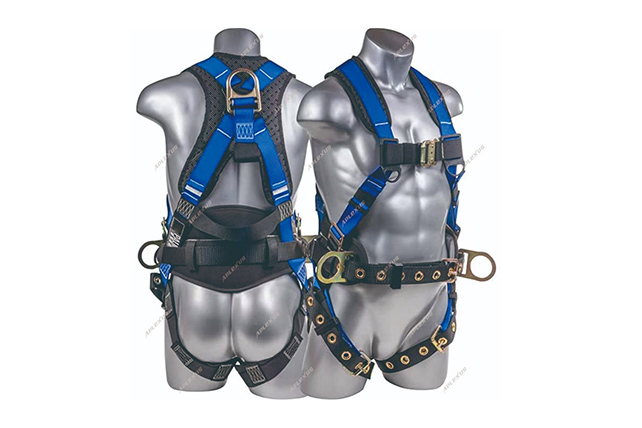
The protection does not necessarily mean that every worker must wear a harness.
Depending on the workplace and task, protection can include:
Guardrail systems
Safety net systems
Personal fall arrest systems
Travel restraint systems
Positioning systems
Other methods allowed by the applicable OSHA requirement
A fall protection harness becomes particularly relevant when a personal fall protection system is selected.
For example, a worker performing maintenance on an elevated platform may use a body harness connected to an appropriate anchorage and connecting device. The complete system must be properly selected, installed, inspected, and used.
For construction work covered by OSHA's construction fall protection requirements, 6 feet is a commonly recognized threshold.
OSHA states that construction workers exposed to vertical drops of 6 feet or more must generally be protected by an appropriate fall protection method. These methods can include guardrail systems, safety net systems, or personal fall arrest systems, depending on the specific work activity and applicable requirement.
A fall arrest harness may be used as part of a personal fall arrest system.
However, the harness itself does not provide complete fall protection. A personal fall arrest system generally includes a body harness, anchorage, and connector. The connector may include a lanyard, deceleration device, lifeline, or a suitable combination of components.
This means employers should evaluate the entire system rather than simply purchasing a harness and assuming the fall hazard has been addressed.
Not necessarily.
A fall protection harness should be selected according to the specific fall hazard, equipment configuration, required clearance, and applicable regulations.
For example, a fall arrest system needs sufficient vertical clearance below the worker. If a worker falls but the available clearance is insufficient, the worker could still strike a lower level or obstruction before the system completely arrests the fall.
The connecting equipment also matters. Different lanyards and self-retracting lifelines can have different operating characteristics and free-fall limitations.
OSHA's personal fall protection requirements specify performance criteria for personal fall arrest systems, including limits on maximum arresting force and requirements concerning free-fall distance.
Therefore, “the worker is wearing a harness” should never be treated as the complete safety assessment.
A body harness, often called a Full-body harness in workplace safety applications, is designed to distribute fall arrest forces across multiple parts of the body.
OSHA defines a body harness as straps arranged to distribute fall arrest forces over the thighs, pelvis, waist, chest, and shoulders, with a means of attaching the harness to other components of a personal fall protection system.
This design is different from relying on a simple belt around the waist.
For a personal fall arrest system, the harness is connected to other components such as an anchorage and connecting device. OSHA also specifies requirements concerning the location of the harness attachment point. In general, the attachment point is positioned around the center of the back near shoulder level, with specific provisions for other configurations.
This distinction is especially important when selecting safety equipment.
A fall arrest system is designed to stop a worker after a fall begins. A typical system can include a body harness, anchorage, connector, and energy-absorbing or other suitable components.
A fall restraint system has a different purpose. Instead of allowing the worker to reach the fall hazard, it is configured to prevent the worker from reaching the edge or other location from which a fall could occur.
OSHA describes travel restraint systems as personal fall protection systems and also recognizes situations where an effective restraint system can be used instead of a personal fall arrest system. A restraint system must be configured so that the worker cannot physically reach the fall hazard.
In practical terms:
Fall restraint: prevent the fall from happening.
Fall arrest: stop the worker after a fall has started.
This difference affects the equipment configuration, anchorage location, lanyard length, clearance requirements, and work procedures.
A Safety Harness fall protection system may be appropriate when workers are exposed to fall hazards and a personal fall protection system is required or selected as the applicable control.
Common applications include:
Construction work
Roof maintenance
Industrial maintenance
Elevated platforms
Telecommunications work
Tower work
Utility work
Equipment inspection
Warehouse maintenance
Certain work involving ladders or elevated structures
The exact requirements vary according to the work environment and applicable regulations.
Workers should also receive appropriate training on how to put on, adjust, connect, inspect, and use the harness and associated equipment.
A harness should be inspected before use according to the manufacturer's instructions and workplace procedures.
Workers should look for signs such as:
Cuts or tears in webbing
Broken or damaged stitching
Excessive abrasion
Burn or chemical damage
Deformed hardware
Damaged buckles
Corrosion
Missing components
Unclear or damaged labels
OSHA requires personal fall protection components to be compatible with one another and protected from damage such as cutting, abrasion, melting, or other deterioration.
The anchorage and connector must also be evaluated. A good harness cannot compensate for an unsuitable anchorage or incorrectly selected connecting device.
The minimum height requirement provides an important starting point, but it should not be the only factor considered.
For example, OSHA's general-industry rules contain requirements for certain situations involving dangerous equipment. In some circumstances, fall protection can be required even when the elevation is less than 4 feet.
Likewise, specific industries and work activities can have different requirements.
Therefore, employers should consider:
The height of the working surface
The distance to the lower level
The presence of dangerous equipment
Unprotected edges
Openings
Roof configuration
Type of work
Applicable industry standard
Available clearance
Anchorage location
Harness and connector compatibility
Choosing a fall protection harness should begin with the work application rather than the product name.
First, identify whether the worker needs fall restraint, fall arrest, positioning, or another type of personal fall protection.
Next, determine the required attachment points and compatible connecting equipment.
The harness should fit the worker correctly and allow the required range of movement without compromising the safety system.
For fall arrest applications, the complete system should also be evaluated for free-fall distance, deceleration distance, total fall clearance, and possible contact with lower levels or obstacles.
A properly configured fall arrest harness is therefore only one component of a broader fall protection strategy.
So, what is the minimum height for fall protection?
Under U.S. OSHA rules, 4 feet is the general trigger for many general-industry walking-working surfaces, while 6 feet is the commonly applicable threshold for many construction activities. However, specific work situations can have different requirements, so the applicable OSHA standard should always be checked.
A fall protection harness can provide an important layer of protection when used as part of a properly designed personal fall protection system. The right solution depends not only on height but also on the work environment, type of hazard, anchorage, connectors, clearance, and applicable safety requirements.

Aplexus Industrial Co.,Ltd Is a trusted provider of semi-finished accessories and personal protective equipment (PPE).

Business wechat
Copyright © 2026 Aplexus Industrial Co.,Ltd All rights reserved.


