 English
Blog


2026-09-28 18:35:04
The two basic approaches commonly used to protect workers from falls are fall restraint and fall arrest.
Although both systems are designed to protect workers from fall hazards, they work in different ways.
A fall restraint system is designed to prevent a worker from reaching a fall hazard, while a fall arrest system is designed to stop a worker after a fall has begun.
A Fall Protection Harness can be used in either type of system, depending on the equipment configuration and applicable requirements.
OSHA recognizes travel restraint and personal fall arrest as types of personal fall protection systems. OSHA's definitions also distinguish between systems intended to prevent exposure to a fall hazard and systems intended to safely arrest a fall.
Understanding this difference is important when selecting a body harness, lanyard, anchorage, or other fall protection equipment.
Fall restraint is a system designed to keep a worker from reaching a location where a fall could occur.
For example, imagine a worker performing maintenance on a flat roof. Instead of allowing the worker to approach the roof edge and relying on equipment to stop a fall, a restraint system can be configured so that the worker cannot physically reach the edge.
This can involve a body harness or other permitted body support equipment connected to an anchorage through an appropriately selected lanyard or restraint line.
The length and configuration of the connecting equipment are critical. The system needs to be arranged so that the worker cannot reach the fall hazard.
OSHA describes an effective fall restraint system as one that is rigged to prevent a worker from reaching the fall hazard and falling over an edge.
Fall arrest works differently.
A fall arrest system does not necessarily prevent the worker from reaching the edge. Instead, it is designed to stop the worker if a fall occurs.
A typical personal fall arrest system consists of:
A body harness
An anchorage
A connector
The connector may include a lanyard, deceleration device, lifeline, self-retracting lifeline, or an appropriate combination of components.
A fall arrest harness is therefore normally used as part of a complete system rather than as an independent piece of equipment.
The system needs to be designed so that the worker is stopped before contacting a lower level or other dangerous obstruction.
The simplest way to understand the difference is to look at what happens when the worker approaches the hazard.
With fall restraint, the system is intended to stop the worker from reaching the hazard.
With fall arrest, the worker may reach the fall hazard and begin to fall, but the system is designed to arrest the fall.
This can be summarized as:
Fall restraint → prevent access to the fall hazard
Fall arrest → stop the fall after it begins
Both approaches can be part of a workplace fall protection program, but the equipment configuration and risk assessment are different.
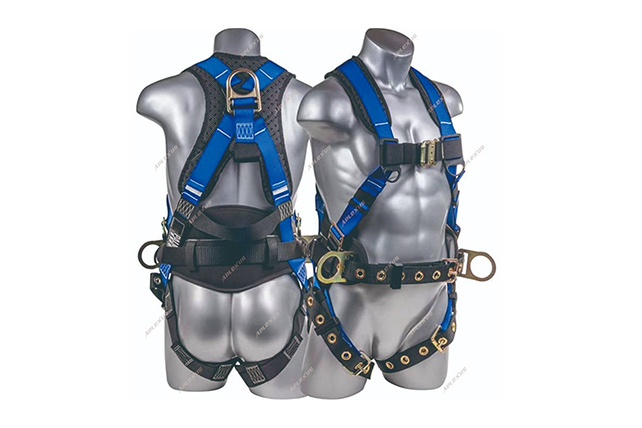
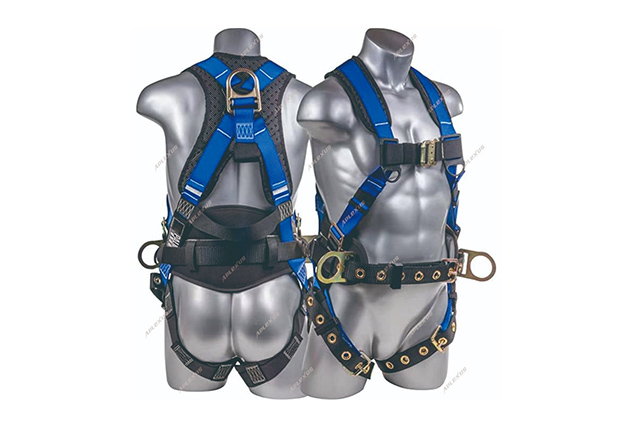
A fall protection harness is designed to connect a worker to the rest of a personal fall protection system.
A properly designed body harness distributes forces across several areas of the body rather than concentrating fall arrest forces at a single point.
OSHA defines a body harness as a system of straps that distributes fall arrest forces over the thighs, pelvis, waist, chest, and shoulders and provides an attachment point for connection to other components of a personal fall protection system.
The harness may include one or more attachment points depending on its design and intended application.
For a personal fall arrest system, OSHA generally specifies that the harness attachment point be located at the center of the back near shoulder level, with specific exceptions for certain configurations.
This is one reason why workers should not modify Harnesses or connect equipment to attachment points that are not designed for the intended application.
A Safety Harness fall protection system normally involves more than the harness itself.
The body harness is worn by the worker and provides the connection between the worker and the rest of the system.
It should fit correctly and be adjusted according to the manufacturer's instructions.
The anchorage provides a secure attachment location for the fall protection system.
Its suitability depends on the application, structure, equipment, and applicable regulatory requirements.
A connector joins the harness to the anchorage or other components.
Examples can include:
Lanyards
Self-retracting lifelines
Lifelines
Rope grabs
Energy-absorbing devices
Connecting hardware
OSHA identifies anchorage, body harnesses, connectors, and deceleration devices as components that can form part of a personal fall protection system.
Fall restraint can be useful when the work environment allows an anchorage and connecting system to be configured so that the worker cannot reach the fall hazard.
Roof work is one example.
If a worker must move around a roof but does not need to approach the edge, a restraint system may be configured with an appropriate anchorage and connection length.
The goal is not to catch the worker after a fall. The goal is to prevent the worker from reaching the point where the fall could occur.
This can reduce reliance on fall arrest clearance, although the system still needs to be correctly designed and used.
Fall arrest may be appropriate when workers must operate in areas where they could potentially fall and a suitable arrest system is required.
Construction, maintenance, tower work, industrial work, and other elevated applications can involve fall arrest systems.
OSHA's construction guidance identifies personal fall arrest systems as one of the options for workers exposed to vertical drops of 6 feet or more in applicable construction situations.
A fall arrest system must be properly configured to prevent the worker from striking a lower level.
This means the system must account for factors such as free-fall distance, deceleration distance, harness attachment location, lanyard characteristics, anchorage position, and available clearance.
Fall clearance is one of the most important considerations when using a fall arrest harness.
Imagine a worker standing several feet above the ground while connected to a fall arrest system. The worker does not simply drop the length of the lanyard and stop immediately.
The actual stopping distance can include free-fall distance and additional deceleration or system movement.
There may also be harness movement and other factors that affect the total clearance required.
OSHA defines deceleration distance as the vertical distance traveled while a deceleration device operates until the employee comes to a complete stop.
Therefore, a fall arrest system should never be selected based only on the visible height of the work surface.
A harness may be designed for multiple applications, but the answer depends on the specific harness, attachment points, manufacturer instructions, connecting equipment, and applicable regulations.
Not every attachment point is designed for every application.
For example, an attachment point designed for work positioning may not automatically be appropriate for fall arrest.
Workers and employers should check the manufacturer's instructions and the applicable standards before configuring the system.
OSHA also requires ropes, belts, lanyards, lifelines, and harnesses used for personal fall protection to be compatible with the connectors used in the system.
The selection process should begin with the work task.
Consider the following factors:
Determine the elevation and the potential fall distance.
Identify whether the worker could fall over an edge, through an opening, from a platform, or into dangerous equipment.
Determine whether the application requires restraint, arrest, positioning, or another type of protection.
Check where the anchorage can safely be installed or used and whether its location is appropriate for the intended system.
Select a compatible lanyard, lifeline, self-retracting device, or other connector.
For fall arrest systems, determine whether sufficient clearance exists below the worker.
The harness must fit the individual worker correctly and be adjusted according to the manufacturer's instructions.
A fall protection harness should be inspected before use and maintained according to the manufacturer's instructions and workplace procedures.
Workers should check for:
Torn webbing
Cuts
Excessive abrasion
Broken stitching
Burn marks
Chemical damage
Corrosion
Damaged buckles
Deformed hardware
Missing labels or components
OSHA requires personal fall protection components to be protected from damage and requires compatibility among system components.
If a harness or other component has been involved in a fall or shows damage, it should be handled according to the manufacturer's inspection, removal, and replacement procedures.
Equipment alone does not create a complete fall protection program.
Workers need to understand how the system works, where they can safely move, how to connect equipment, how to inspect the harness, and what to do if a fall occurs.
Employers should also consider rescue procedures.
OSHA's personal fall protection standard requires employers to provide for prompt rescue of employees in the event of a fall.
This is particularly important for workers who could remain suspended in a harness after a fall.
The two basic types of fall protection commonly discussed are fall restraint and fall arrest.
Fall restraint is designed to prevent a worker from reaching a fall hazard, while fall arrest is designed to stop a worker after a fall begins.
A body harness can be an important component of either system, depending on its design and the way it is connected to the rest of the equipment.
For fall arrest applications, a fall arrest harness should be treated as one component of a complete system that also considers anchorage, connectors, fall clearance, and rescue procedures. OSHA defines personal fall arrest systems around these interconnected components rather than the harness alone.
For anyone selecting safety harness fall protection equipment, the most important step is to match the harness and complete system to the actual work environment, fall hazard, applicable regulations, and manufacturer's instructions.

Aplexus Industrial Co.,Ltd Is a trusted provider of semi-finished accessories and personal protective equipment (PPE).

Business wechat
Copyright © 2026 Aplexus Industrial Co.,Ltd All rights reserved.


