 English
Blog


2026-09-21 13:57:03
Yes, nylon is one of the most widely used materials for Tactical Gear because it offers a useful combination of strength, abrasion resistance, flexibility, relatively low weight, and dimensional stability. Different nylon constructions, including 500D and 1000D fabrics, can be selected according to the required load capacity and operating environment. However, nylon is not automatically the best choice for every tactical product. Fabric denier, weave, coating, yarn type, stitching construction, and environmental exposure all affect final performance. For B2B buyers, selecting the right nylon specification is more important than simply choosing “nylon” as a material.
For tactical backpacks, pouches, vests, belts, chest rigs, equipment bags, and other textile-based Tactical Equipment, nylon can provide a practical balance between durability and weight. The appropriate specification depends on whether the product is designed for daily outdoor use, heavy-duty carrying, law enforcement equipment, training, hunting, security applications, or commercial outdoor markets.
The popularity of nylon comes from its combination of mechanical and physical properties. Tactical products are often exposed to abrasion, repeated bending, pulling forces, moisture, dirt, and contact with rough surfaces. A suitable nylon fabric can withstand these conditions while remaining flexible enough for equipment that needs to be packed, worn, or repeatedly adjusted.
Compared with many heavier textile materials, nylon can provide a relatively high strength-to-weight ratio. This is important for products such as tactical backpacks and load-bearing equipment, where adding unnecessary fabric weight can affect user comfort and overall carrying efficiency.
Nylon also works well with common tactical construction methods. It can be cut, sewn, reinforced, laminated, coated, and combined with webbing, hook-and-loop fasteners, buckles, zippers, and other components. This makes it adaptable to different product designs and manufacturing processes.
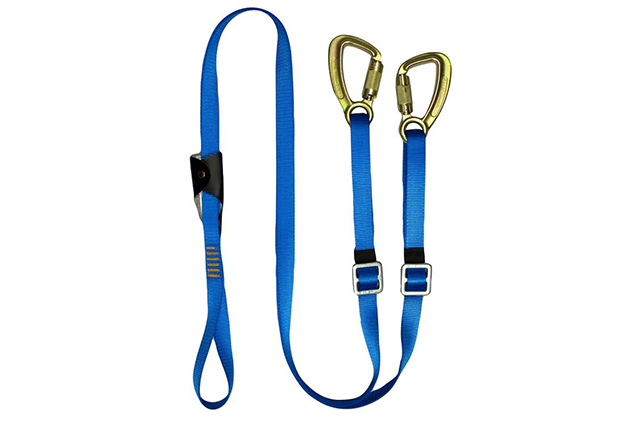
Not all nylon fabrics have the same performance. One of the specifications commonly discussed by buyers is denier, which describes the linear density of the yarn. In practical terms, higher denier fabrics generally use heavier yarns, although denier alone does not determine overall fabric quality.
500D nylon is often selected when buyers want a balance between durability, flexibility, weight, and cost. It can be suitable for tactical backpacks, pouches, accessory bags, panels, and other products that need good abrasion resistance without becoming unnecessarily heavy.
For commercial tactical equipment, 500D nylon can be a practical option when the product is expected to experience regular use but does not require the maximum fabric thickness available.
1000D nylon generally uses heavier yarns and provides a more substantial fabric structure. It is commonly considered for heavy-duty tactical products, including reinforced bags, load-bearing equipment, tactical packs, and areas exposed to significant abrasion.
The trade-off is weight and stiffness. A 1000D construction may provide greater resistance to rough handling, but using it throughout an entire product can make the finished equipment heavier and less flexible than necessary.
Manufacturers may also work with different denier levels, yarn constructions, weave patterns, coatings, and finishes depending on the product requirements. Therefore, buyers should specify the required fabric performance instead of selecting a fabric only by denier.
Abrasion resistance is one of the most important properties for tactical gear materials. Backpacks, pouches, and belts can repeatedly rub against vehicles, walls, equipment, ground surfaces, and other textiles.
Nylon fabric with an appropriate weave and yarn construction can withstand repeated surface friction. However, the actual performance depends on fabric construction rather than fiber type alone. Seam reinforcement and edge binding are equally important in areas that experience concentrated wear.
Tactical products are frequently subjected to pulling and loading forces. Straps may be pulled during adjustment, pouch attachment points may carry concentrated loads, and backpack handles can experience high forces when the product is lifted while fully loaded.
Nylon's tensile characteristics make it suitable for these applications, but the finished product's load-bearing capacity also depends on thread selection, stitch density, seam design, bartacks, reinforcement panels, and the connection between fabric and hardware.
A tactical product needs sufficient flexibility to conform to the user's body or accommodate equipment. Nylon can maintain useful flexibility while still providing structural support, making it suitable for products with multiple compartments, attachment points, and adjustable straps.
Weight is another important consideration. A heavy-duty fabric may improve resistance to abrasion, but excessive material weight can reduce comfort and increase shipping costs for large-volume orders.
For B2B product development, a manufacturer may use different fabric specifications in different sections of the same product. A lighter fabric can be used for low-stress panels, while heavier nylon can be added around the base, attachment points, handles, or other high-wear areas.
Nylon itself should not automatically be described as waterproof. Standard nylon fabric can absorb some moisture, while the water resistance of a finished tactical product depends on fabric construction, coatings, laminations, seam design, and closures.
Common surface treatments include polyurethane-based coatings and other water-resistant finishes. These treatments can reduce water penetration through the fabric, but they do not necessarily make the complete product waterproof.
For example, a tactical backpack made from coated nylon may resist rain effectively, but water can still enter through unsealed seams, zipper openings, stitching holes, or poorly protected access points.
Therefore, buyers should distinguish between terms such as water-resistant, water-repellent, and waterproof. If a specific water-resistance performance is required, it is better to define the test method or performance requirement rather than relying on a general marketing description.
Nylon fabric is normally converted into finished tactical products through several stages. The process begins with material selection according to the required fabric specification, color, coating, weight, and application.
The fabric is then cut according to digital or physical patterns. Accurate cutting is important because incorrect dimensions can affect panel alignment, pocket positioning, seam allowance, and final product dimensions.
During sewing, manufacturers may use reinforced stitching in high-stress areas. Bartack stitching is commonly used around strap connections and attachment points because it concentrates multiple stitches over a short area. Depending on the design, binding tape may also be applied to exposed edges to improve appearance and reduce fabric fraying.
Webbing, hook-and-loop panels, buckles, zippers, MOLLE-compatible attachment systems, and reinforcement fabrics can then be integrated into the product. The final quality depends on the interaction between these components rather than the nylon fabric alone.
Nylon is not the only material suitable for tactical applications. Polyester, canvas, laminates, and specialized composite textiles may also be used depending on the required performance.
Compared with polyester, nylon is often selected when higher abrasion resistance and a favorable strength-to-weight balance are important. Polyester, however, can offer advantages in areas such as UV resistance, dimensional stability, and cost depending on the specific fabric construction.
Canvas can provide a different tactile feel and appearance, but it may be heavier and behave differently when exposed to moisture. Specialized laminated fabrics can provide additional structural or protective properties, but they may increase material cost and require more complex manufacturing processes.
For this reason, the correct question is not simply whether nylon is better than another material. The more useful question is whether a particular nylon specification meets the product's required strength, weight, flexibility, abrasion resistance, environmental exposure, and target price.
B2B buyers should evaluate the complete product specification before approving a material. Important factors include:
Denier: Determine whether 500D, 1000D, or another specification is appropriate.
Weave construction: Evaluate how the fabric structure affects strength and abrasion resistance.
Fabric weight: Balance durability against total product weight.
Coating: Confirm whether polyurethane or another treatment is required for water resistance.
Color fastness: Consider exposure to sunlight, washing, friction, and repeated handling.
Seam construction: Check thread type, stitch density, bartacks, and reinforcement.
Hardware compatibility: Ensure the fabric works properly with buckles, zippers, hook-and-loop systems, and webbing.
End-use environment: Consider temperature, moisture, UV exposure, abrasion, and expected loading conditions.
For importers and product developers, requesting a physical sample is strongly recommended. A sample allows the buyer to inspect fabric hand feel, thickness, stitching, hardware integration, logo placement, pocket construction, and overall finishing before placing a bulk order.
The main advantages of nylon include good strength-to-weight performance, abrasion resistance, flexibility, processing versatility, and compatibility with many tactical product designs. These properties make nylon a practical material for backpacks, vests, pouches, belts, bags, and other tactical equipment.
There are also limitations. Nylon can be affected by prolonged UV exposure depending on the specific formulation and finish. Moisture behavior varies by fabric construction, and high-denier nylon can add weight and stiffness. Certain coatings may also deteriorate through repeated abrasion, folding, chemical exposure, or inappropriate cleaning.
These limitations do not make nylon unsuitable. Instead, they show why material selection should be based on actual application requirements rather than simply choosing the heaviest available fabric.
It depends on the application. Nylon can be a strong choice when abrasion resistance, flexibility, and strength-to-weight performance are important. Polyester may be preferable for certain applications where UV stability, dimensional stability, or cost is a higher priority.
Not necessarily. 1000D nylon generally provides a heavier and more substantial construction, while 500D nylon can provide a useful balance between durability and weight. The appropriate choice depends on product design and expected operating conditions.
Yes, but the fabric specification and water-resistance treatment should be considered. Coated nylon can provide better resistance to water, but the complete product also needs appropriate seams, closures, and construction if moisture protection is important.
Yes. Nylon is commonly used for custom tactical gear because it can be cut, sewn, reinforced, coated, and combined with different hardware and attachment systems. Custom logo methods such as embroidery, patches, printing, and labels can also be selected according to the fabric surface.
The appropriate specification depends on the expected load and operating environment. A lighter tactical backpack may use a medium-denier nylon to reduce weight, while a heavy-duty pack may use heavier fabric in high-abrasion or high-load areas. A hybrid construction can also be considered to balance durability and weight.
Nylon is a highly practical material for Tactical Gear because it combines strength, abrasion resistance, flexibility, relatively low weight, and manufacturing versatility. However, choosing the right nylon requires more than selecting a denier number. Fabric weave, coating, weight, reinforcement, stitching, hardware compatibility, and environmental exposure all influence the final performance of the product.
For B2B buyers, the most effective approach is to define the intended application first and then select the appropriate tactical gear fabric. Whether developing a tactical backpack, vest, pouch, belt, or other tactical equipment, a properly specified nylon construction can provide a useful balance between durability, comfort, performance, and manufacturing cost.

Aplexus Industrial Co.,Ltd Is a trusted provider of semi-finished accessories and personal protective equipment (PPE).

Business wechat
Copyright © 2026 Aplexus Industrial Co.,Ltd All rights reserved.


