 English
Blog


2026-07-31 11:52:34
There are five main types of Safety Harnesses, each built for a different fall-protection scenario: fall arrest harnesses, Work Positioning Harnesses, restraint harnesses, rescue harnesses, and confined space harnesses. Choosing the right type matters because each one distributes force, attaches to lanyards, and supports movement differently—using the wrong type for a job can mean inadequate protection even if the harness itself is high quality.
Basic safety belts have largely been phased out because they concentrate fall forces on the waist, which can cause serious injury. Modern Harnesses instead spread that force across the body's stronger areas—shoulders, thighs, pelvis, and chest—which is why the specific type of harness, and how it's built, matters as much as the fact that a worker is wearing one at all.
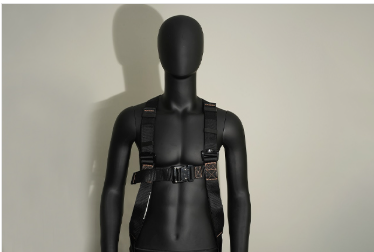
Purpose: Stops a fall in progress and distributes the impact force to reduce injury risk.
Key Features:
A back D-ring as the primary attachment point for lanyards or self-retracting lifelines (SRLs)
Requires a shock-absorbing lanyard or SRL to limit the force of the fall
Use Cases: Construction, roofing, scaffolding, and elevated platforms—essentially any work at heights above 6 feet (1.8 meters) where a fall hazard exists.
Purpose: Holds a worker securely in place so they can work hands-free without needing to hold onto a structure.
Key Features:
Side D-rings for attaching positioning lanyards
Often includes a chest D-ring for additional support
Use Cases: Utility pole climbing, tower maintenance, and window washing—jobs where a worker needs to stay in one spot while using both hands.
Purpose: Prevents a worker from reaching a fall hazard in the first place, rather than arresting a fall after it happens.
Key Features:
A short lanyard that limits movement to a safe zone
No shock absorption needed, since no free fall is meant to occur
Use Cases: Roofing, edge work, and confined space entry preparation, where the goal is to keep the worker away from the danger zone entirely.
Purpose: Supports safely raising or lowering a person during a rescue operation.
Key Features:
Multiple D-rings (such as underarm and chest points) for versatile attachment
High-strength Webbing designed to support lifting loads
Use Cases: Confined space rescue and retrieving a suspended worker after a fall.
Purpose: Provides fall protection in tight spaces without adding bulk that could get in the way of movement.
Key Features:
Retrieval attachment points, often at the shoulders
A lightweight design built for easy movement in restricted areas
Use Cases: Tanks, silos, and underground tunnels, where space is limited and quick retrieval may be necessary.
The type of harness needed depends less on the industry and more on the specific task: whether a fall could actually occur (fall arrest), whether hands-free positioning is needed (work positioning), whether the goal is to prevent reaching a hazard at all (restraint), whether rescue capability is required (rescue), or whether the workspace itself is physically restrictive (confined space).
Because these harnesses aren't interchangeable in a real emergency, matching the harness type to the actual work environment is just as important as harness quality itself.
If you're sourcing Safety Harnesses for a specific application—construction, utility work, confined space entry, or rescue operations—sharing the task details and height requirements can help confirm which harness type and configuration is the right fit.

Aplexus Industrial Co.,Ltd Is a trusted provider of semi-finished accessories and personal protective equipment (PPE).

Business wechat
Copyright © 2026 Aplexus Industrial Co.,Ltd All rights reserved.


