 English
Blog


2026-06-13 16:36:09
A universal safety harness is a critical piece of personal protective equipment (PPE) designed for workers operating in environments with a risk of falling from height. Its main purpose is to prevent serious injury or fatality by securely holding the user and distributing fall forces evenly across the body during an accident.
It is widely used in industries such as construction, industrial maintenance, roofing, energy, and confined space operations. Thanks to its adjustable and versatile design, a universal safety harness can fit different body types and working conditions, making it a standard solution in modern fall protection systems.
A universal safety harness is a full-body fall protection system that secures the user at multiple points, including the shoulders, chest, waist, and legs. Unlike basic safety belts that only support the waist, a Full-body harness is engineered to distribute impact forces across stronger areas of the body.
The term “universal” refers to its adjustable structure, which allows it to fit a wide range of users without customization. This makes it suitable for general industrial applications and large-scale workforce deployment.
In most fall protection systems, the harness is used together with a lanyard, anchor point, or lifeline as part of a complete fall arrest system.
The purpose of a universal safety harness can be understood through three key functions:
The primary purpose is to prevent injury during a fall. When a fall occurs, the harness distributes the impact force across the thighs, pelvis, chest, and shoulders instead of concentrating it on a single point. This significantly reduces the risk of severe injury or death.
A safety harness also improves stability when working at height. Whether on scaffolding, rooftops, or industrial structures, it helps workers maintain balance and move more safely during operations.
A universal safety harness is designed to integrate with different fall protection equipment, including shock-absorbing lanyards and anchor systems. Its flexible design ensures compatibility across multiple industries and working environments.
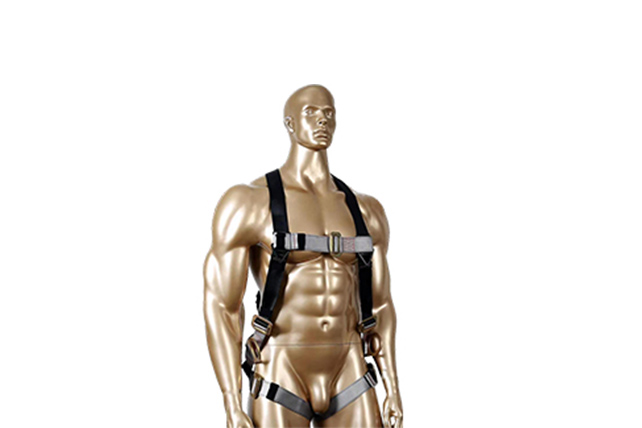
Universal safety Harnesses are widely used in high-risk working environments, including:
Construction sites – working on scaffolding, steel structures, or buildings under construction
Industrial maintenance – servicing machinery or elevated equipment
Roofing work – preventing falls on sloped or unstable surfaces
Confined spaces – tanks, tunnels, shafts, or underground operations
Energy sector – wind turbines, transmission towers, and power plants
In all these scenarios, the harness serves as a critical safety barrier between the worker and potential fall hazards.
The effectiveness of a universal safety harness depends on its structural design and component layout:
Shoulder straps: provide upper body support and stability
Chest strap: keeps the harness properly positioned during movement
Leg straps: distribute fall forces and prevent upward slippage
D-rings: connection points for lanyards and lifelines in fall arrest systems
Adjustment buckles: allow customization for different body sizes and ensure proper fit
Each component plays an essential role in ensuring that, in the event of a fall, forces are controlled and evenly distributed across the body.
The purpose of a universal safety harness is to provide reliable fall protection for workers in hazardous environments. It not only prevents falls but also reduces injury severity, improves worker stability, and ensures compatibility with complete fall protection systems.
Because of its adjustable design and broad applicability, it has become a standard safety solution across industries where working at height is required.

Aplexus Industrial Co.,Ltd Is a trusted provider of semi-finished accessories and personal protective equipment (PPE).

Business wechat
Copyright © 2026 Aplexus Industrial Co.,Ltd All rights reserved.


