 English
Blog


2026-06-13 16:43:06
A full body harness is a critical component of a fall protection system designed to protect workers from serious injury during a fall from height. One of its most important functions is to distribute the weight and impact forces generated during a fall across the strongest parts of the human body.
Understanding how full body harness straps distribute weight during a fall is essential for improving workplace safety, selecting the right equipment, and ensuring compliance with industrial safety standards such as OSHA and ANSI regulations.
When a worker falls, the body is exposed to sudden and extreme forces caused by gravity and deceleration. Without a harness, these forces would concentrate on a single area of the body, often resulting in severe injury.
A full body harness prevents this by spreading the force across multiple contact points. Instead of impacting one part of the body, the load is distributed through engineered straps and attachment points that work together as a system.
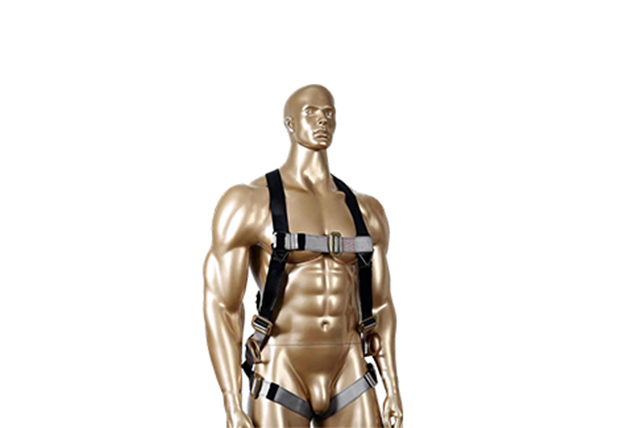
A full body harness is designed with multiple interconnected straps that engage simultaneously during a fall. These straps are strategically positioned to redirect force away from vulnerable areas and toward stronger parts of the body.
The shoulder straps play a key role in stabilizing the upper body. During a fall, they help keep the worker upright and prevent excessive forward or backward rotation. They also share part of the load, reducing stress on the lower body.
The chest strap ensures that the shoulder straps remain properly positioned. While it does not carry the full load, it helps maintain body alignment so that forces are evenly distributed and the harness stays secure during suspension.
Leg straps are among the most important components in weight distribution. During a fall, a significant portion of the force is transferred to the thighs and pelvic region, which are stronger and better able to absorb impact compared to the upper body.
This is one of the main reasons full body Harnesses are safer than waist belts, which concentrate force on the abdomen and lower back.
D-rings act as the connection point between the harness and the fall arrest system. When a fall occurs, the D-ring becomes the central load transfer point, directing force from the lanyard into the harness structure.
From there, the load is distributed evenly through the webbing straps across the body, preventing any single point from bearing excessive force.
Modern full body harnesses use high-strength polyester or Nylon Webbing designed to absorb and slightly stretch under load. This controlled elasticity helps reduce peak impact force during a fall.
In many systems, the harness works together with a shock-absorbing lanyard, which further reduces the energy transferred to the body.
To better understand weight distribution, it helps to break down what happens in a fall event:
The worker falls and the lanyard becomes tensioned
The D-ring receives the initial load impact
Force is transferred into the harness webbing system
Shoulder, chest, and leg straps engage simultaneously
The load is distributed across the thighs, pelvis, and upper torso
The shock-absorbing system reduces peak impact force
This coordinated system ensures that no single part of the body absorbs the full impact of the fall.
Even the best full body harness cannot function correctly if it is not properly fitted. Incorrect adjustment can lead to uneven force distribution, increasing the risk of injury.
A properly fitted harness ensures that:
Straps are snug but not overly tight
D-ring remains centered on the back
Leg straps sit securely without excessive slack
Load is distributed evenly across all contact points
Full body harnesses are widely used in industries where fall risks are present, including:
Construction and scaffolding work
Industrial maintenance and equipment repair
Roofing and exterior building work
Confined space entry and rescue operations
Energy sector such as wind turbines and transmission towers
In all these environments, proper weight distribution is essential to protect workers from life-threatening injuries.
Full body harness straps distribute weight during a fall by working as an integrated load-sharing system. Instead of allowing impact forces to concentrate on a single part of the body, the harness spreads the force across the shoulders, chest, and legs while the D-ring and webbing system manage load transfer.
This engineered distribution of force is what makes full body harnesses one of the most effective fall protection solutions in industrial safety systems.

Aplexus Industrial Co.,Ltd Is a trusted provider of semi-finished accessories and personal protective equipment (PPE).

Business wechat
Copyright © 2026 Aplexus Industrial Co.,Ltd All rights reserved.


