 English
Blog


2026-10-31 16:14:25
Tactical Belt Pouches are designed for better storage by combining purpose-specific compartments, accessible openings, secure retention systems, durable materials, and stable belt or modular attachments. A well-designed pouch must do more than hold equipment. It should keep items organised, prevent them from shifting during movement, protect sensitive contents, and allow users to retrieve what they need without unnecessary delay. For overseas buyers sourcing Tactical Gears, these design details directly influence product usability, durability, manufacturing cost, and suitability for different markets.
For B2B procurement, storage capacity alone is not a sufficient specification. A pouch with a large internal volume may still perform poorly if its compartments are difficult to reach, its opening is too narrow, or its attachment system allows the pouch to swing under load. Effective design begins with understanding the equipment being carried, the user's movement, and the belt platform on which the pouch will be installed.
A tactical belt pouch improves storage through a combination of external dimensions, internal compartment layout, closure construction, and attachment design. Each component has a different function, and the best configuration depends on the type, size, weight, and frequency of use of the carried equipment.
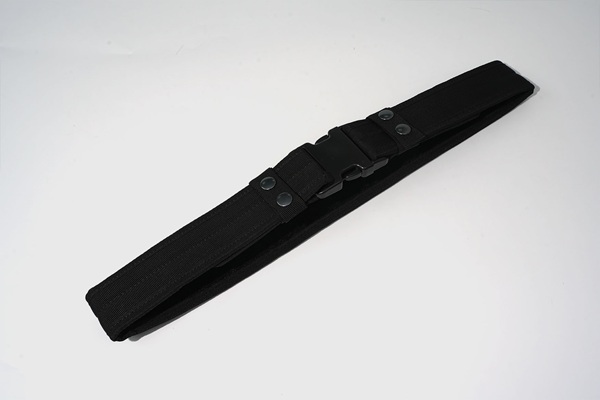
The internal structure determines whether equipment can be stored separately and retrieved efficiently. A single large compartment may be suitable for general-purpose storage, but smaller items can become mixed together, making retrieval less convenient. Adding internal dividers, elastic loops, mesh pockets, or removable inserts helps separate equipment according to its function.
For example, a utility pouch intended for small tools may include elastic loops to prevent individual items from moving. An administrative pouch may use flat sleeves for documents, cards, and writing instruments. A radio pouch requires a compartment shaped around the device, with enough clearance for controls, antenna connections, and cables.
Designers should consider the dimensions of actual equipment rather than relying only on estimated storage volume. A compartment that is too tight can make insertion difficult, while excessive clearance allows contents to move and collide. During sample development, manufacturers can use representative equipment or dimensionally accurate samples to verify the fit before approving the production pattern.
The opening determines how easily users can access stored items. Common closure options include zippers, hook-and-loop flaps, snap fasteners, buckles, and elastic openings. Each has different advantages.
Zippers: Provide a more enclosed storage space and help prevent loose items from falling out. Zipper length, tooth size, slider quality, and corner construction affect operation and service life.
Hook-and-loop closures: Allow quick opening and adjustment. The hook and loop areas must be correctly positioned to provide sufficient engagement without making the flap difficult to operate.
Buckles and snaps: Offer mechanical closure and can provide additional security. Their location should not interfere with neighbouring equipment or belt movement.
Elastic openings: Allow flexible access to items with different dimensions. Elastic tension must be controlled to balance easy insertion with reliable retention.
For a pouch that is frequently opened, designers should test the closure while the product is mounted on a belt. A zipper that operates smoothly on a flat sample may become difficult to pull when the pouch is compressed against the user's body or positioned beside another module.
The rear attachment system determines how securely a pouch connects to a tactical belt or modular platform. Common options include fixed belt loops, removable belt loops, MOLLE-compatible straps, polymer clips, and hook-and-loop mounting panels.
For MOLLE/PALS-compatible designs, a commonly used reference layout includes approximately 25.4 mm (1 inch) webbing, approximately 25.4 mm spacing between horizontal rows, and attachment stitch intervals around 38.1 mm (1.5 inches). These are common design references rather than a substitute for checking the dimensions and tolerances of the actual mounting platform.
Attachment geometry is particularly important for pouches carrying dense equipment. If the rear straps are too narrow or poorly positioned, the pouch may rotate or lean when loaded. Reinforced stitching, suitable backing materials, and correctly spaced attachment points help distribute the load across the rear panel.
Storage design affects more than organisation. It influences movement, comfort, equipment protection, and the reliability of the complete carrying system.
Better organisation reduces unnecessary handling. When frequently used equipment has a defined position, users do not need to search through a mixed compartment. This is especially relevant for utility pouches, radio holders, medical equipment carriers, and administrative storage modules.
Proper retention protects stored contents. Equipment can shift when users walk, run, bend, or change direction. Internal elastic loops, adjustable straps, fitted compartments, and secure closures help reduce unwanted movement. The required retention level depends on the equipment's weight, shape, and intended use.
Balanced construction improves wearing comfort. A pouch that projects too far from the belt can create pressure points or interfere with nearby equipment. A low-profile structure can reduce unnecessary bulk, but it must still provide enough usable space and clearance for the intended contents.
Modular compatibility increases product flexibility. Tactical users and distributors often need to combine different pouch types on the same belt or carrier. Compatible mounting dimensions allow a product range to serve more configurations and reduce the need for separate attachment systems.
For manufacturers and importers, these details also influence product returns and customer satisfaction. A pouch may look attractive in product photographs but generate complaints if its compartments do not fit the advertised equipment or its attachment system is unstable under normal use.
Material selection affects the pouch's weight, shape retention, abrasion resistance, flexibility, and overall service life. There is no single fabric that is ideal for every tactical belt pouch. The correct choice depends on the expected load, operating environment, required structure, and target price.
| Material | Main Characteristics | Typical Design Application |
|---|---|---|
| 600D polyester | Balanced weight, structure, and cost | General utility and lightweight storage pouches |
| 900D polyester | Firmer construction and increased body | Medium-duty equipment storage |
| 1000D nylon | Suitable for demanding abrasion applications when correctly constructed | Heavy-use tactical and tool pouches |
| Laminated tactical fabric | Supports low-profile and laser-cut constructions | Modular mounting panels |
| Mesh fabric | Allows visibility and ventilation | Internal organisers and secondary pockets |
| Elastic Webbing | Provides flexible retention | Tool loops and adjustable internal holders |
Fabric denier should not be treated as the only measure of quality. Two fabrics with the same denier rating may differ in yarn quality, weave density, coating, tear resistance, and abrasion performance. Buyers should evaluate the complete material specification and finished construction rather than selecting products based on a single number.
Manufacturing accuracy begins with pattern development. Designers prepare patterns for the front panel, rear panel, gusset, flap, lining, and internal dividers. The pattern must account for fabric thickness, seam allowance, folding positions, and the final usable dimensions.
Cutting accuracy is important because small dimensional differences can affect the finished compartment. If the front and rear panels are not aligned, the pouch may twist after sewing. Inconsistent gusset dimensions can also create uneven depth, reducing usable storage space or making the opening difficult to close.
During sewing, the order of assembly matters. Internal pockets, elastic loops, and dividers are usually positioned before the main pouch body is fully closed. Reinforcement patches and attachment webbing must also be installed at the correct stage so that load-bearing seams can be secured properly.
Bar-tack stitching is commonly used at high-stress points, such as webbing anchors, belt loops, and strap connections. However, adding more stitches does not automatically produce a stronger pouch. Stitch density, thread suitability, needle size, fabric thickness, sewing tension, and reinforcement coverage must work together. Excessive stitching can perforate or damage certain materials, while insufficient reinforcement may allow seams to separate under repeated loading.
Internal retention is essential when a pouch carries objects with different shapes or weights. A compartment that simply provides enough space may not keep its contents stable during movement.
Elastic loops hold individual items in defined positions. They are useful for tools, small accessories, batteries, and other equipment that needs to remain separated. Their width, stretch, recovery, and attachment method should be selected according to the dimensions and weight of the stored items.
For example, an elastic loop that is too tight may make equipment difficult to remove and place unnecessary stress on the stitching. If it is too loose, the item may slip out when the pouch is tilted. Sample testing should therefore include repeated insertion and removal, not just a visual check of the elastic layout.
Adjustable straps can accommodate equipment with slightly different dimensions. They are useful when a pouch needs to hold a range of compatible items rather than one fixed product. The buckle or hook-and-loop closure should remain accessible after the pouch is mounted.
Retention should also be tested under realistic movement conditions. A pouch may hold an item securely when stationary but allow it to shift when subjected to repeated movement. Testing should examine whether the equipment remains in place without making retrieval unnecessarily difficult.
Some equipment requires additional protection from impact, friction, or contact with other stored objects. Foam padding, lining fabrics, and reinforced bottom panels can help protect sensitive contents. The padding thickness should be determined by the equipment's dimensions and protection requirements.
Excessive padding can reduce usable internal volume and make the pouch unnecessarily bulky. For a compact belt-mounted product, designers must balance protection with storage capacity, weight, and wearing comfort.
A reliable tactical belt pouch should be evaluated as a complete product. Checking the fabric alone cannot confirm that the finished pouch will maintain its shape, retain its contents, and remain attached during use.
| Inspection Item | What to Check | Why It Matters |
|---|---|---|
| Dimensional inspection | Finished width, height, depth, and opening size | Confirms storage capacity and equipment fit |
| Seam inspection | Stitch consistency, loose threads, skipped stitches, and seam strength | Identifies potential construction failures |
| Attachment inspection | Belt loop dimensions, MOLLE fit, strap locking, and mounting stability | Reduces movement and detachment risks |
| Closure testing | Zipper movement, buckle engagement, and hook-and-loop adhesion | Checks reliable opening and closing |
| Retention testing | Equipment movement during tilting and repeated handling | Verifies internal storage security |
| Material inspection | Fabric consistency, coating condition, webbing, and hardware finish | Supports consistent production quality |
| Loaded-use evaluation | Sagging, rotation, deformation, and accessibility | Checks performance under intended use conditions |
For example, a radio pouch should be evaluated with a device of the intended dimensions. Inspectors should check whether the radio fits without excessive pressure, whether its controls remain accessible, and whether the antenna and cable connections have sufficient clearance. A general-purpose pouch should be tested with representative contents at the agreed working load.
For a loaded-use evaluation, buyers and manufacturers should define the test load, mounting platform, test duration, and acceptance criteria before testing. After repeated handling, inspectors should look for elongated stitch holes, stretched webbing, loose attachment points, distorted panels, damaged closures, and changes in compartment dimensions.
Static load testing alone is not enough. A pouch can support a given weight on a table but still swing, rotate, or become difficult to open when worn. A practical approval process should therefore include both structural inspection and functional testing on the intended belt system.
For importers, wholesalers, and distributors, product selection should begin with the target market and intended application. A low-profile utility pouch, a radio holder, and a medical storage pouch may all use similar outer fabrics, but their internal structures and performance requirements are different.
Before requesting quotations, buyers should prepare a clear product specification covering:
Intended use and equipment dimensions
Finished pouch size and usable internal capacity
Main fabric, lining, padding, and reinforcement materials
Number and arrangement of internal compartments
Closure type and retention requirements
Belt width compatibility and mounting method
Webbing, buckles, zippers, and other hardware specifications
Colour, camouflage pattern, logo, and branding requirements
Packaging, labelling, and barcode requirements
Sample approval, inspection criteria, and order quantity
Customisation should be evaluated according to its functional value. Adding unnecessary pockets, straps, or hardware may increase material consumption and assembly time without improving storage performance. A more effective approach is to identify the equipment that must be carried and design each feature around a clear purpose.
Buyers should also request a pre-production sample and confirm the final construction before bulk manufacturing. The approved sample should establish the dimensions, materials, stitching, attachment details, logo placement, and packaging standard. Any later change to these specifications should be documented to avoid differences between the approved sample and delivered products.
Better storage in tactical belt pouches comes from integrating compartment organisation, secure retention, accessible closures, appropriate materials, and stable attachment systems. The design must reflect the dimensions and weight of the equipment being carried, as well as the movement and mounting conditions expected during use.
For overseas B2B buyers, evaluating the complete construction is more useful than comparing fabric specifications or storage capacity alone. A qualified Tactical Gears manufacturer should be able to explain its material selection, pattern development, reinforcement methods, sewing standards, and quality inspection procedures. Clear specifications and practical sample testing help importers and wholesalers source tactical belt pouches that are functional, consistent, and suitable for their target markets.

Aplexus Industrial Co.,Ltd Is a trusted provider of semi-finished accessories and personal protective equipment (PPE).

Business wechat
Copyright © 2026 Aplexus Industrial Co.,Ltd All rights reserved.


