 English
Blog


2026-09-15 11:32:50
Durable tactical gear depends on more than fabric thickness. High-quality materials, reinforced stitching, strong webbing, reliable hardware, functional design, and consistent manufacturing all contribute to long-term performance. For professional users and B2B buyers, factors such as abrasion resistance, tensile strength, load capacity, water resistance, and material compatibility should be considered together. During Tactical Gear Manufacture, the right combination of fabric, thread, reinforcement, buckles, zippers, and construction methods helps ensure that tactical products can withstand repeated use in demanding environments.
Material selection is one of the first factors to consider when evaluating tactical gear. Nylon and polyester are widely used because they provide a practical combination of strength, flexibility, abrasion resistance, and weight.
500D nylon is commonly selected when buyers need a balance between durability and weight. It can be suitable for tactical backpacks, pouches, chest rigs, and other equipment that needs reasonable abrasion resistance without becoming unnecessarily heavy.
1000D nylon provides a heavier construction and is often considered for products exposed to higher abrasion or more demanding use. However, higher denier does not automatically mean a better product. The actual weave, yarn quality, coating, stitching, and overall construction also affect performance.
Polyester can also be used for tactical products, particularly where UV resistance, dimensional stability, and cost are important considerations. The appropriate material should always be selected according to the product's intended application rather than simply choosing the thickest available fabric.
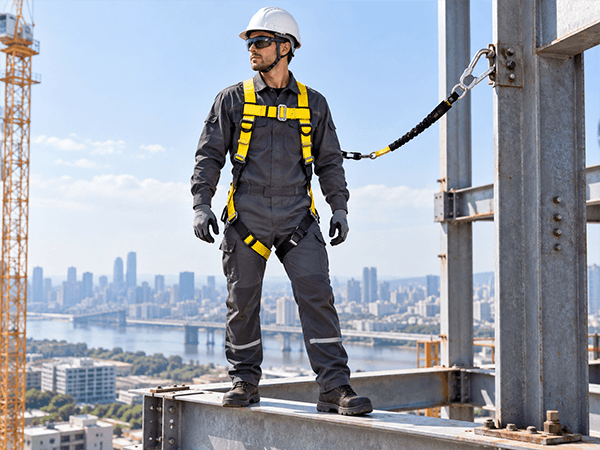
Even a high-quality fabric can fail if the product is poorly constructed. Tactical Equipment often experiences concentrated loads around handles, shoulder straps, belt loops, MOLLE attachment points, and pouch connections. These areas require additional reinforcement.
Bartack stitching and reinforced seams are commonly used in high-stress areas. Multiple stitching patterns can help distribute loads and reduce the risk of seam failure. Thread selection is also important because the thread needs to provide sufficient tensile strength and abrasion resistance for the intended application.
Stitch density, seam allowance, thread tension, and sewing accuracy all influence the final result. Too much thread tension can damage the fabric, while loose stitching can reduce seam strength.
Webbing is another important structural component. Shoulder straps, belt loops, handles, and MOLLE panels need to be securely attached to the main fabric. The width and strength of the webbing should correspond to the expected load.
For MOLLE-compatible products, accurate webbing spacing and consistent stitching are particularly important. Poor alignment can make accessories difficult to attach and may reduce the stability of the load.
Yes. Buckles, zippers, clips, adjusters, D-rings, snaps, and other hardware can become failure points if they are not matched to the application.
Polymer hardware can reduce overall weight and is suitable for many tactical applications, while metal hardware may be preferred when greater rigidity or mechanical strength is required. The choice depends on expected load, environmental conditions, temperature, corrosion exposure, and product weight requirements.
Zippers also deserve attention. A tactical backpack that is frequently opened under load requires a zipper system capable of repeated operation without excessive deformation or separation. For products used in wet or dusty environments, zipper construction and protective design can also affect reliability.
Professional tactical equipment may be exposed to abrasion, moisture, mud, dust, sunlight, sweat, and repeated mechanical stress. Therefore, durability needs to be evaluated according to the actual operating environment.
For outdoor applications, buyers may prioritize abrasion resistance, water resistance, UV stability, and easy maintenance. For load-bearing equipment, attachment strength and seam construction may be more important. For lightweight EDC products, reducing unnecessary weight may be more valuable than using the heaviest fabric available.
Coatings can also affect performance. A suitable PU coating or other finishing treatment may improve water resistance, but the coating must remain compatible with the base fabric and intended use. Buyers should consider flexibility, adhesion, and long-term performance rather than treating a coating simply as a waterproofing solution.
A professional Tactical Gear Manufacture process normally includes material inspection, pattern development, cutting, sewing, hardware assembly, reinforcement, inspection, and final quality control.
During cutting, panel dimensions need to remain consistent so that the finished product maintains its intended shape. During sewing, seam allowances, thread tension, webbing position, and reinforcement points need to be controlled.
For custom products, prototype development is particularly useful. A sample allows the buyer and manufacturer to check dimensions, fit, load distribution, accessibility, stitching, hardware operation, and overall usability before mass production.
Quality control should also continue during mass production. A product that performs well as a prototype may still experience inconsistency if materials or production processes are not properly controlled across a large order.
For overseas importers, distributors, and brands, the selection process should start with the intended application rather than the product's appearance.
Define the expected load and frequency of use.
Select fabric according to strength, weight, abrasion, and environmental requirements.
Check reinforcement around high-stress areas.
Confirm webbing and hardware specifications.
Evaluate stitching and seam construction.
Request samples before large-scale production.
Confirm quality inspection procedures.
Discuss MOQ, lead time, and customization requirements.
When working with a Tactical Gear Supplier, buyers should also ask whether the supplier can provide material specifications, prototype development, OEM/ODM support, and production inspection records. These details provide a better indication of manufacturing capability than product photographs alone.
For brands developing Custom Tactical Gear, durability should be considered during product design. The manufacturer may help select fabric, webbing, hardware, reinforcement methods, dimensions, and production techniques according to the required application.
OEM/ODM projects may also involve custom colors, logos, labels, packaging, product structures, and accessories. These requirements can affect both production cost and MOQ.
For example, a custom fabric color or specialized hardware may require a larger purchasing quantity than a standard component. Buyers should therefore discuss the MOQ at the beginning of development rather than after the design has been finalized.
No. 1000D nylon can provide a heavier and more abrasion-resistant construction, but it also adds weight and stiffness. 500D nylon may be more suitable when the product requires a balance between durability and portability.
There is no single factor. Material quality, stitching, reinforcement, hardware, design, and manufacturing consistency all work together. A weak seam or attachment point can become the limiting factor even when the fabric itself is strong.
Yes. Custom Tactical Gear can be developed with different fabrics, webbing, hardware, reinforcement structures, colors, dimensions, and logo treatments according to the intended application and order requirements.
Ask about material specifications, production capabilities, quality control, sample availability, customization options, MOQ, lead time, packaging, and inspection procedures. For larger orders, it is also useful to confirm how material consistency is maintained during production.
Durable tactical gear is the result of appropriate material selection, reinforced construction, reliable hardware, and controlled manufacturing. Choosing a thicker fabric alone does not guarantee better performance. The fabric, webbing, stitching, hardware, coating, and product structure must be matched to the intended load and operating environment.
For B2B buyers, importers, and brands, working with an experienced Tactical Gear Supplier can make it easier to balance durability, weight, cost, MOQ, and customization requirements. A well-developed OEM/ODM process, supported by prototypes and quality inspection, can help turn a product concept into tactical equipment that performs consistently in real-world applications.

Aplexus Industrial Co.,Ltd Is a trusted provider of semi-finished accessories and personal protective equipment (PPE).

Business wechat
Copyright © 2026 Aplexus Industrial Co.,Ltd All rights reserved.


