



 English

Choosing the right Tree Climbing Harness comes down to matching the anchorage configuration to how you actually work in the tree—fall arrest, work positioning, suspension, or rescue—rather than assuming one harness covers every scenario equally well. A harness built around a multi-point anchorage system, like a 5-point configuration, gives you the flexibility to rig for different operations without switching gear, but knowing which anchor points you'll actually use is what determines whether that flexibility is worth paying for.
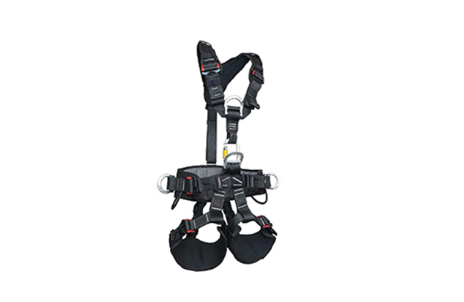
1. Know The Difference Between Work Positioning And Fall Arrest
These are two different jobs a harness can do, and it's worth being clear on which one applies to your work. Work positioning holds you in place while your weight rests on the harness for extended periods—this is what most arborists need for the bulk of a climb. Fall arrest is designed to catch a fall rather than support sustained weight-bearing. A harness rated only for fall arrest isn't necessarily comfortable or appropriate for hours of sustained hanging, which is why multi-purpose systems built for both are common in professional arborist gear.
2. Consider How Many Anchor Points You Actually Need
More anchor points generally mean more rigging flexibility—separate points for climbing, work positioning, suspension, and rescue attachment let you switch configurations without re-rigging the whole system. If your work is mostly straightforward pruning at moderate heights, you may not need every anchor point a rescue-capable harness offers. If your work regularly shifts between climbing, suspended positioning, and emergency response, a harness with a broader anchorage system is worth the investment.
3. Prioritize Comfort For Sustained Wear
Since most of a climb involves your weight resting on the harness rather than free-hanging briefly, comfort during extended wear matters more here than in general fall-protection Harnesses. Padding at the waist and leg loops, and how evenly the harness distributes weight across the hips, will affect fatigue over a full workday far more than any single spec on a data sheet.
Not sure which anchorage configuration fits your typical climbs? Send us the type of work you do most often (pruning, rescue, rigging, etc.), and we'll help confirm the right setup—we typically respond within 24 hours.
4. Match The Harness To Your Actual Working Environment
Arborists, rescue teams, and technical rope-access climbers don't all face the same demands. Rescue teams need fast, reliable access to a dorsal or rescue-rated attachment point under stress. Arborists doing routine pruning need durable, comfortable gear for repeated daily use. Technical climbers working extreme-height rope access need a system that holds up to more complex multi-point rigging. Being specific about your working environment—rather than buying based on the most feature-heavy option—usually leads to a better long-term fit.
5. Check Certification And Material Specs Against Your Requirements
A professional-grade Tree Climbing Harness should carry recognized certifications—CE and ANSI compliance with EN 361 (fall arrest), EN 358 (work positioning), and EN 813 (sit harness) standards covers the main use cases most arborists and rescue teams need. On the material side, look for high-strength Polyester Webbing (commonly around 45mm in width) paired with lightweight, corrosion-resistant hardware such as 7075 aluminum alloy, with a tensile strength rating in the range of 20KN or higher for industrial-grade fall protection use.
Choosing the right Tree Climbing Harness ultimately comes down to being honest about how you actually use it day to day—work positioning versus fall arrest, how many anchor points you really need, and how much of your workday is spent with your full weight resting in the harness. Getting this right affects both safety and how well the gear holds up to daily professional use.
If you're outfitting a crew or evaluating a tree climbing harness for a specific application, sharing your typical work type and any required certification standards can help confirm the right configuration. OEM/ODM customization—including color and structural adjustments—is generally available for bulk orders, so it's also worth flagging any branding or design requirements upfront if you're placing a larger order.